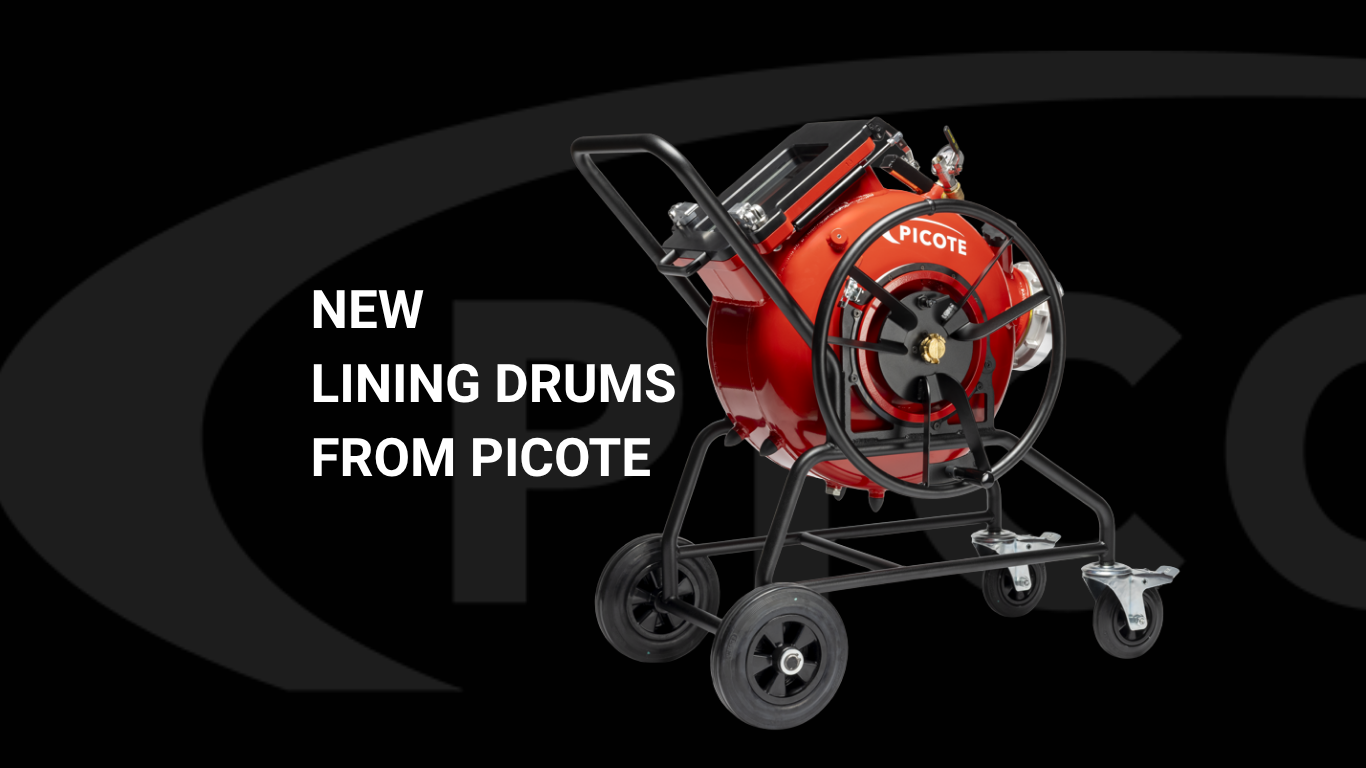

Built on Experience:
The story behind Picote’s new CIPP Lining Drum Range
A conversation with Picote Technical Director Olav Törnroos about developing the company's new generation of CIPP lining drums
What began as an in-house product development project quickly became a far more ambitious engineering exercise. We spoke with Picote Technical Director Olav Törnroos about the challenges of designing pressure-rated lining drums, the role of practical contracting experience and why some of the biggest innovations are the ones users never see.
What prompted Picote to develop its own lining drums?
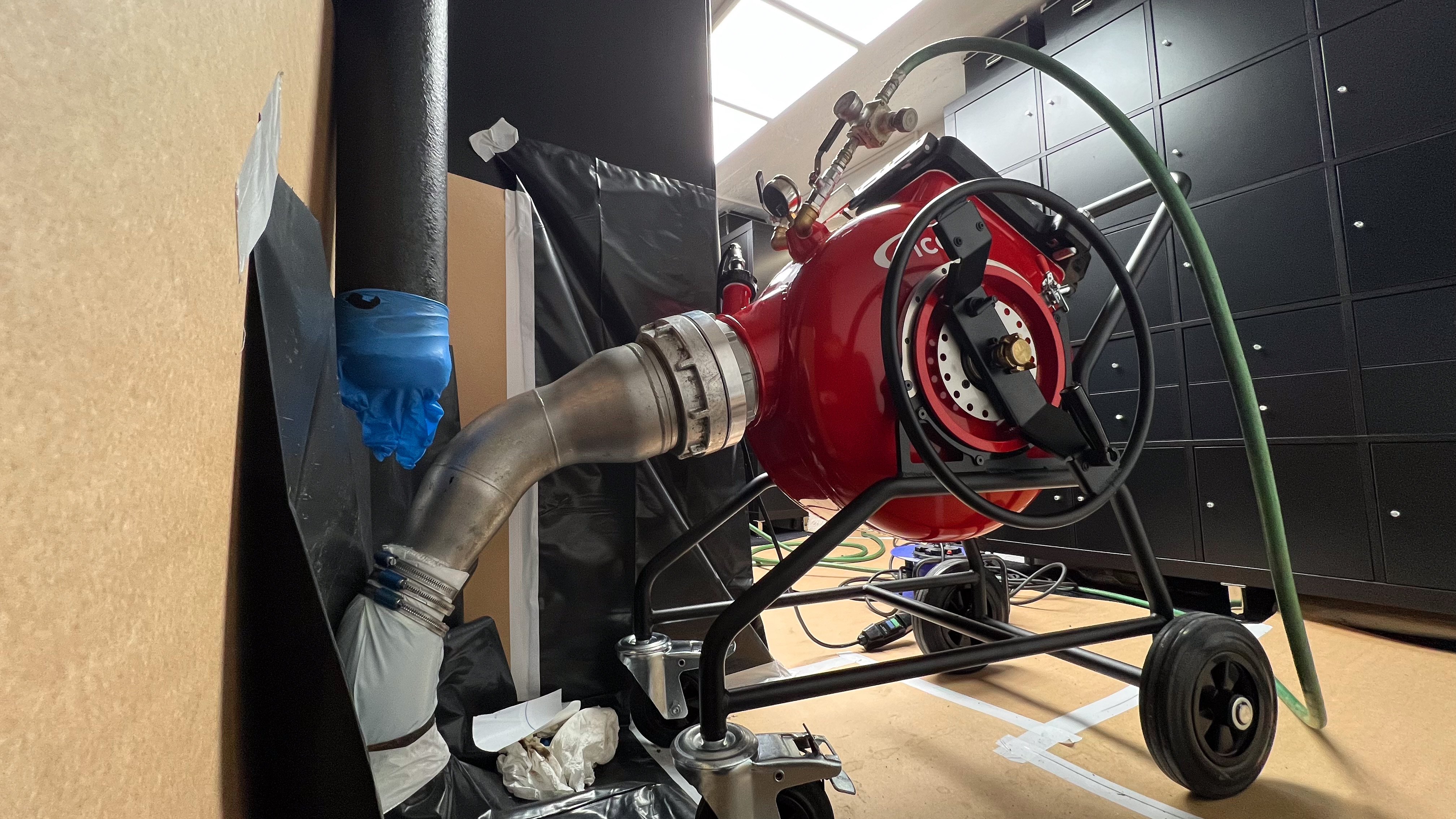
We've been supplying and using lining drums for many years, so we'd developed a clear understanding of what contractors value in day-to-day use. Along the way, we'd also identified a number of practical improvements we felt could make the equipment even easier and more efficient to use. Because we already had the design, machining and fabrication expertise in-house, developing our own drum became the logical next step.
It wasn't about producing another drum. We wanted to take everything we'd learned through manufacturing, product development and our own contracting experience and build it into a single design from the outset.
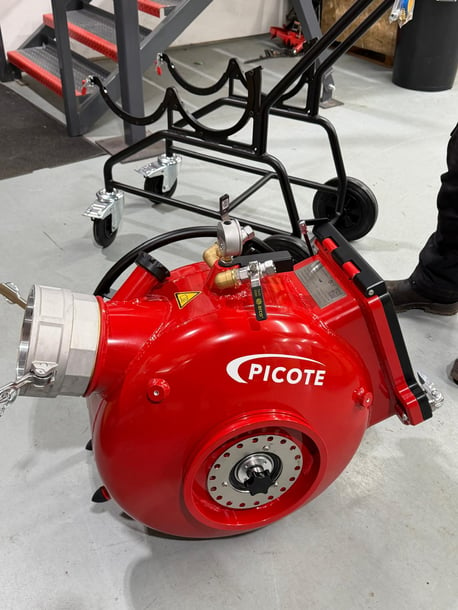
Photo: Picote drums can be removed from their trolleys for flexible worksite access: crawl spaces, loft hatches etc.
Your products are developed through your own contracting business. How important is that to the design process?
It's a huge advantage. Our contracting teams in Finland use the equipment every day on live installations, so we're constantly getting feedback from the people who rely on it in real working conditions.
That feedback is invaluable because it often highlights the small details that make the biggest difference on site. Whether it's making something quicker to operate, easier to handle or more intuitive to use, those practical lessons feed directly into the way we develop and refine our equipment.
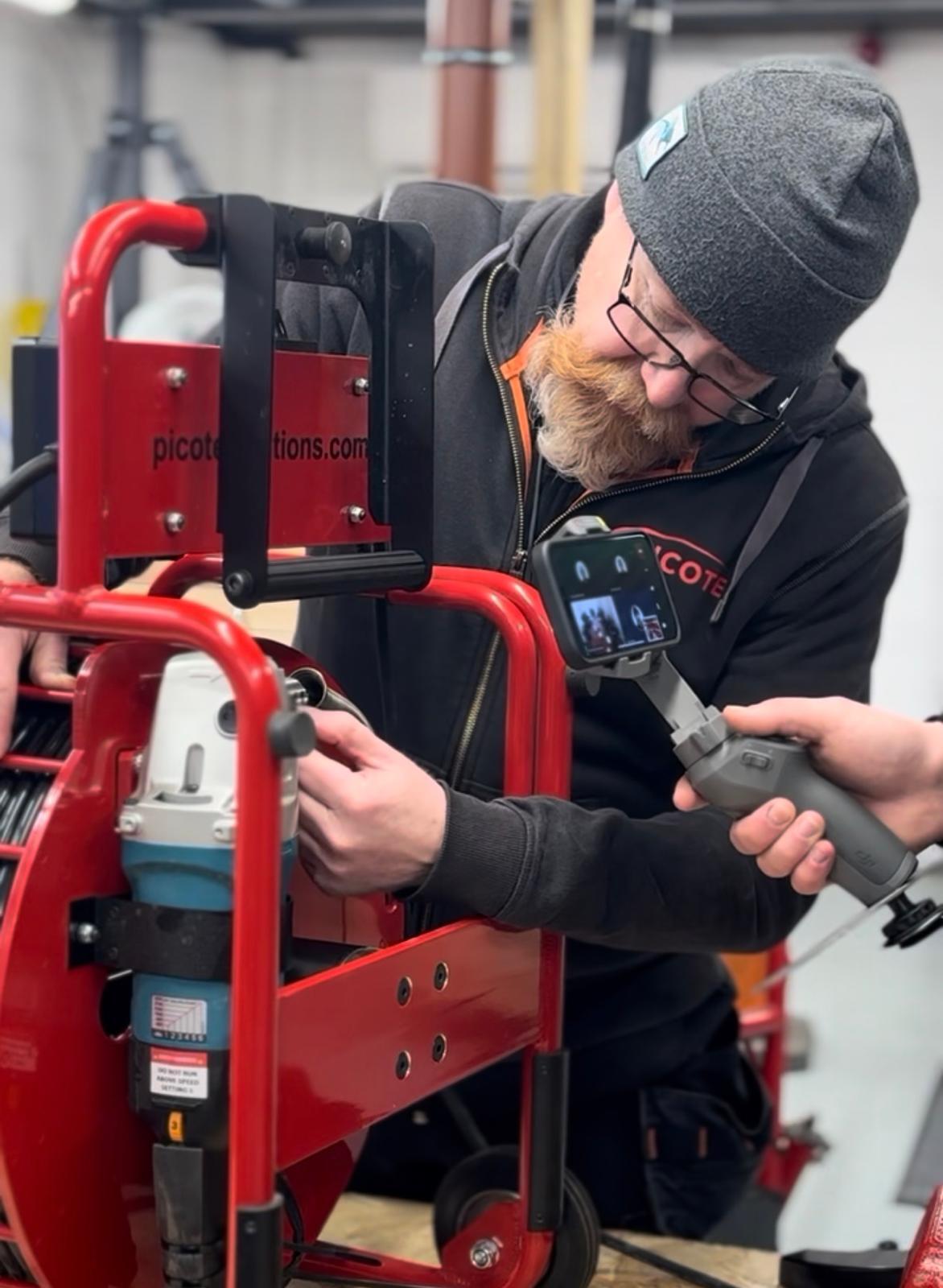
The idea was to make the drum as intuitive as possible. We wanted routine tasks, like changing nozzles and accessories, to be quick and straightforward, without the need for spanners or other hand tools.
Can you tell us about how the drums are manufactured?
The manufacturing process combines advanced automation with skilled craftsmanship. Precision components are welded using robotic production processes at our facility in Estonia before being transported to Finland, where every drum is hand-assembled, hand-finished and individually tested.
Keeping manufacturing in-house gives us complete control over quality and allows us to continuously refine the product as new ideas emerge. Every drum is built to recognised engineering standards and undergoes rigorous testing before leaving the factory, giving contractors confidence that the equipment will perform reliably in demanding conditions.
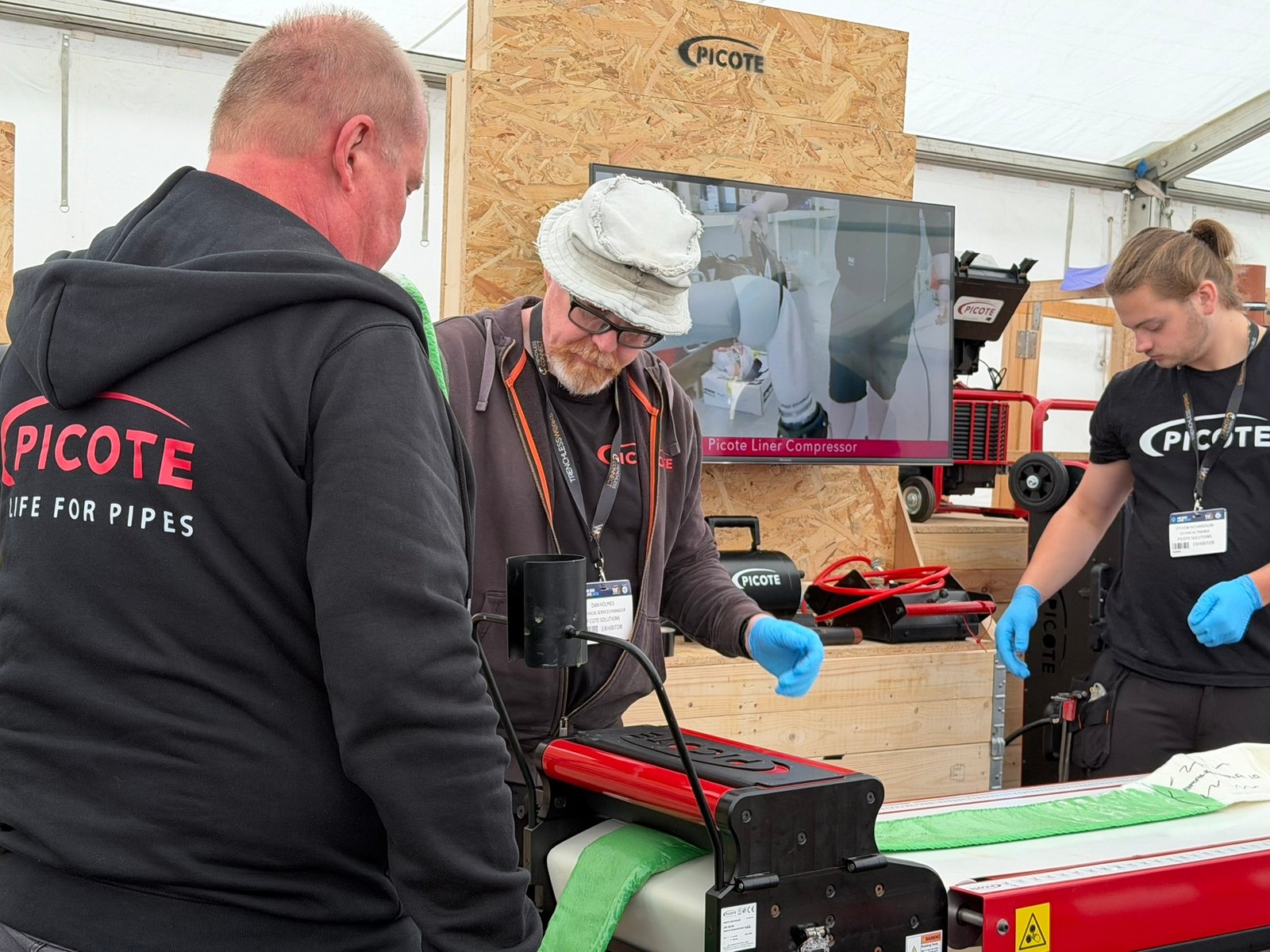
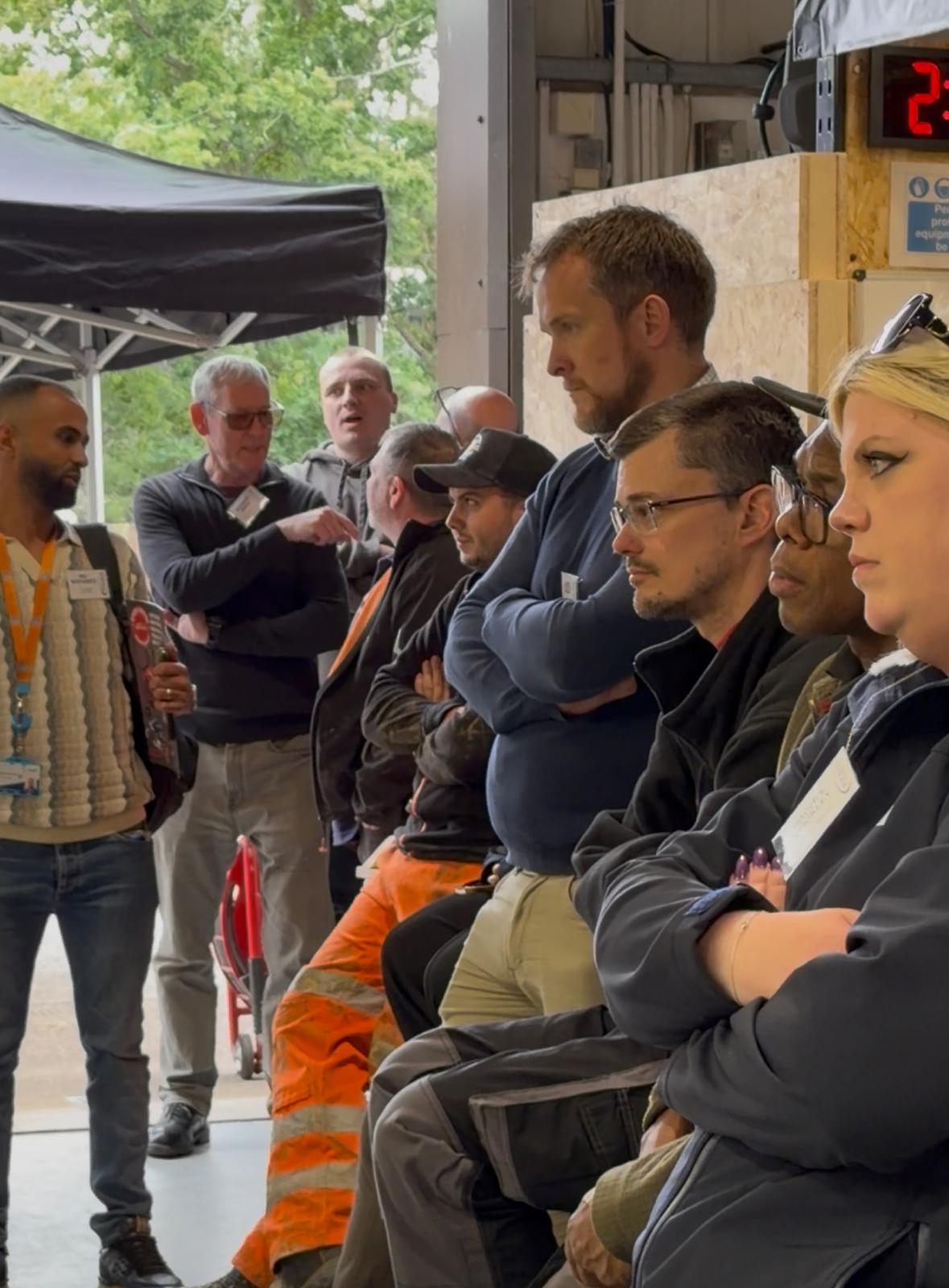
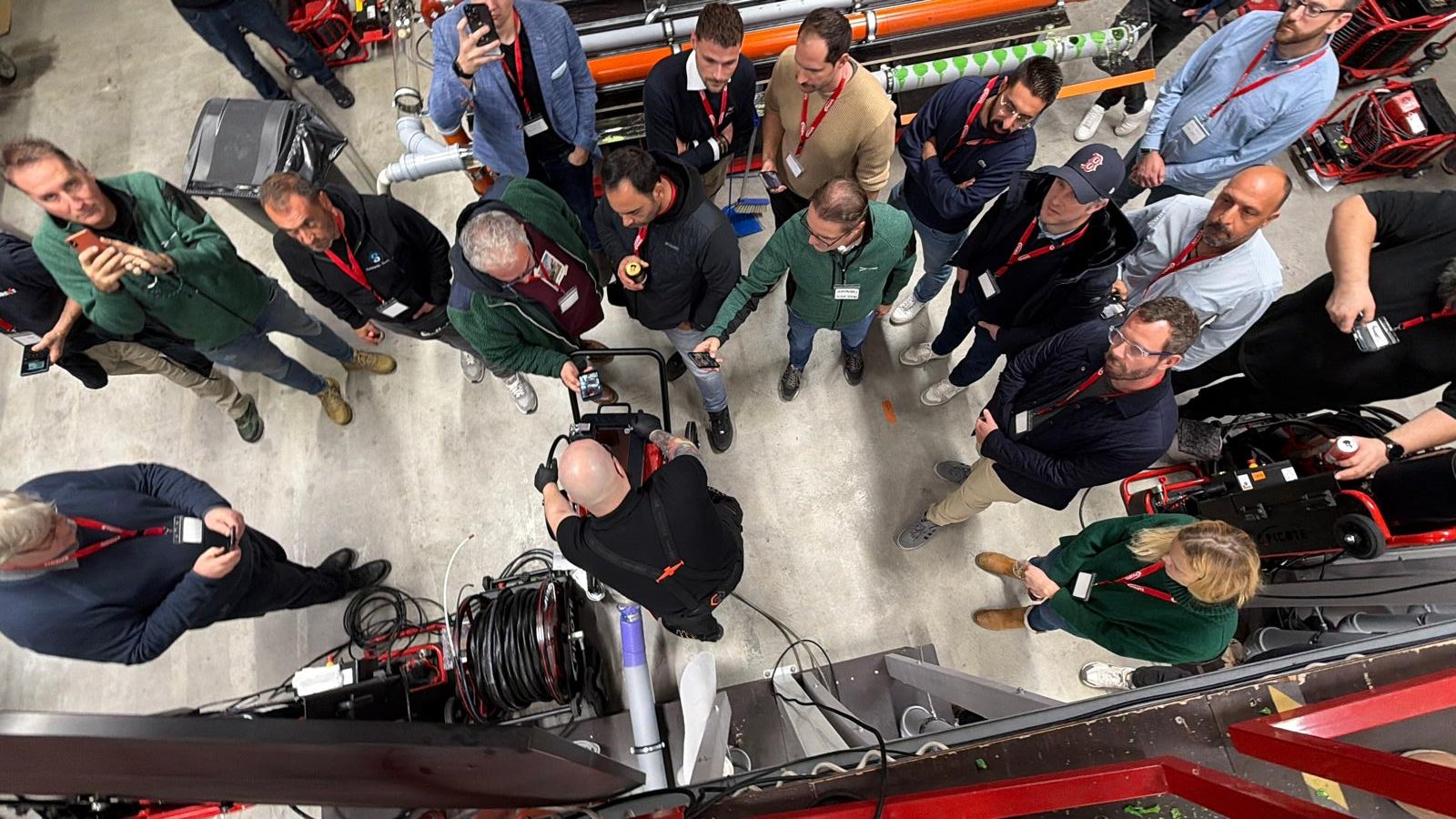
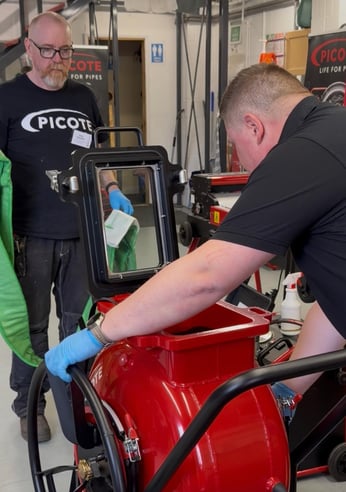
Photo: Olav and Dan Holmes demonstrating the drums at the UK Open House in Sandhurst, June 2026
Did the project turn out to be more challenging than you expected?
Definitely! One of the biggest challenges centred on pressure ratings. Once you increase the operating pressure, the drums fall within the scope of the European Pressure Equipment Directive (PED).
That changes the whole project. It's no longer just about designing a strong product. The design, manufacturing processes, welding procedures, quality systems and inspection all have to meet recognised standards.
It required specialist training, investment in manufacturing processes and extensive third-party inspection and certification. It became a far more complex project than we'd originally anticipated, but we felt it was important to do it properly.
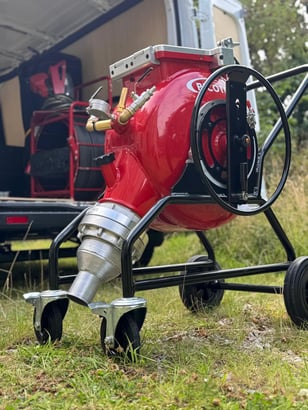
Photo: Prototype 550 drum being used on a live job site in the UK to get feedback in Summer 2025
What does that investment mean for contractors?
It means contractors have a drum that's fully compliant with recognised international standards while giving them greater flexibility when working with a wider range of liner materials.
A lot of that work isn't immediately visible, but it's fundamental to how the drums have been designed and manufactured.
Beyond compliance, what were you hoping to improve?
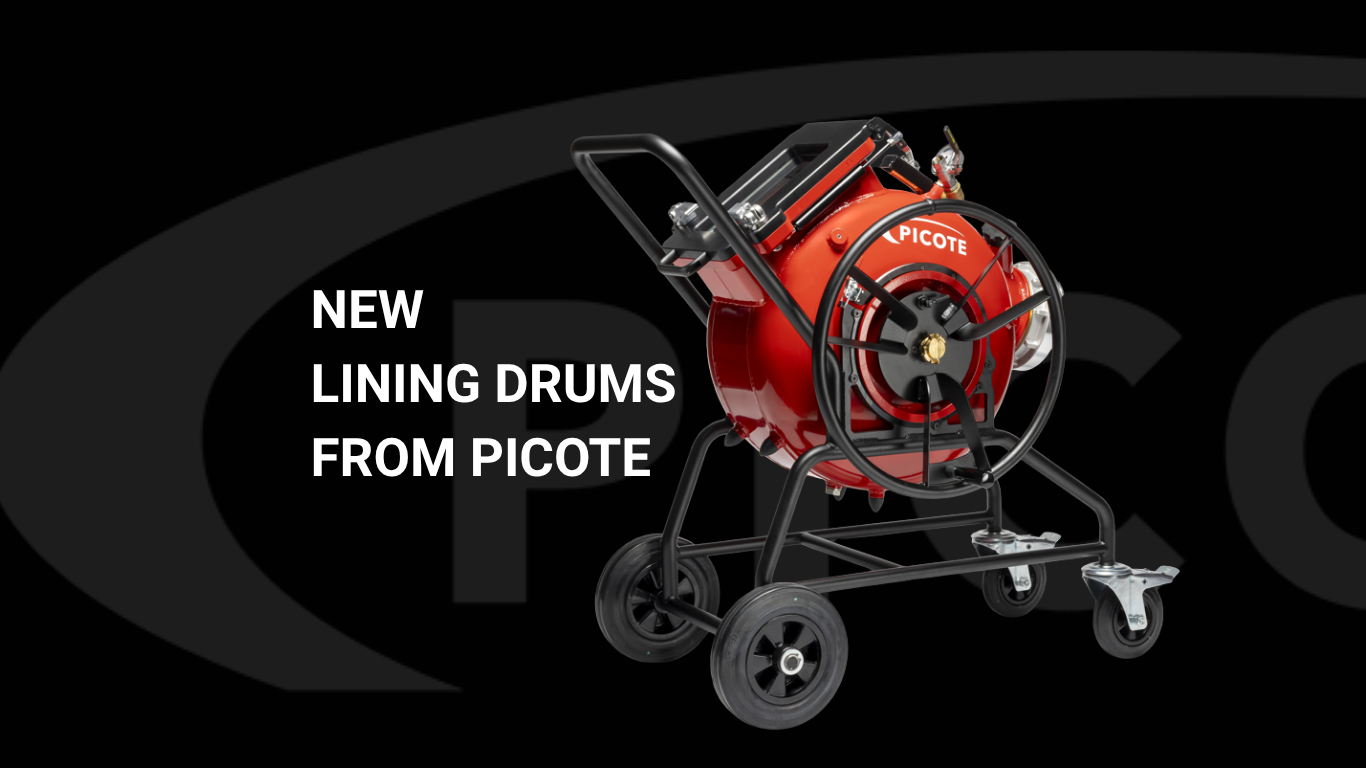
Ease of use was just as important. Features such as larger wheels, a robust trolley, removable drum assembly, multiple mounting positions and a larger viewing window all came from practical experience. We wanted the equipment to be straightforward to handle and adaptable to different working environments.
Often it's those small improvements that have the biggest impact over the course of a working day.
What proved to be the biggest engineering challenges?
Probably the access hatch and the pressure rating. The pressure vessel standards are written for equipment such as boilers and industrial pressure vessels, where quick access isn't usually a priority. We wanted to develop a hatch that complied with those standards while still being practical for contractors to use.
That led us to develop a two-stage locking mechanism that safely releases any residual pressure before the hatch can be removed. It's one of those features that looks quite simple when it's finished, but it took a lot of engineering to get right.
Meeting the required pressure rating wasn't simply a case of making everything stronger. Every component had to work together as part of a compliant pressure vessel while still producing a drum that was practical to manufacture, transport and use every day. Balancing those requirements took considerable engineering, testing and refinement.
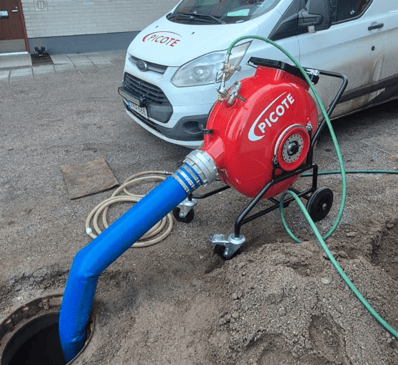
Photo: Picote 780 Lining Drum with Picote contractors in Finland.
How has the growth of UV curing influenced the design?
When lining drums were originally developed, UV curing wasn't widely used. As contractors adapted equipment to accommodate UV systems, the additional weight could sometimes affect stability.
We designed these drums with UV curing in mind from the beginning, lowering the centre of gravity to improve stability. It's not a dramatic visual change, but it's something operators will appreciate during everyday use.
Another practical feature is the hollow central shaft, which allows water to pass through the axle while enabling the crank wheel to be mounted on either side of the drum. It's particularly useful when working in confined spaces where access can be limited.
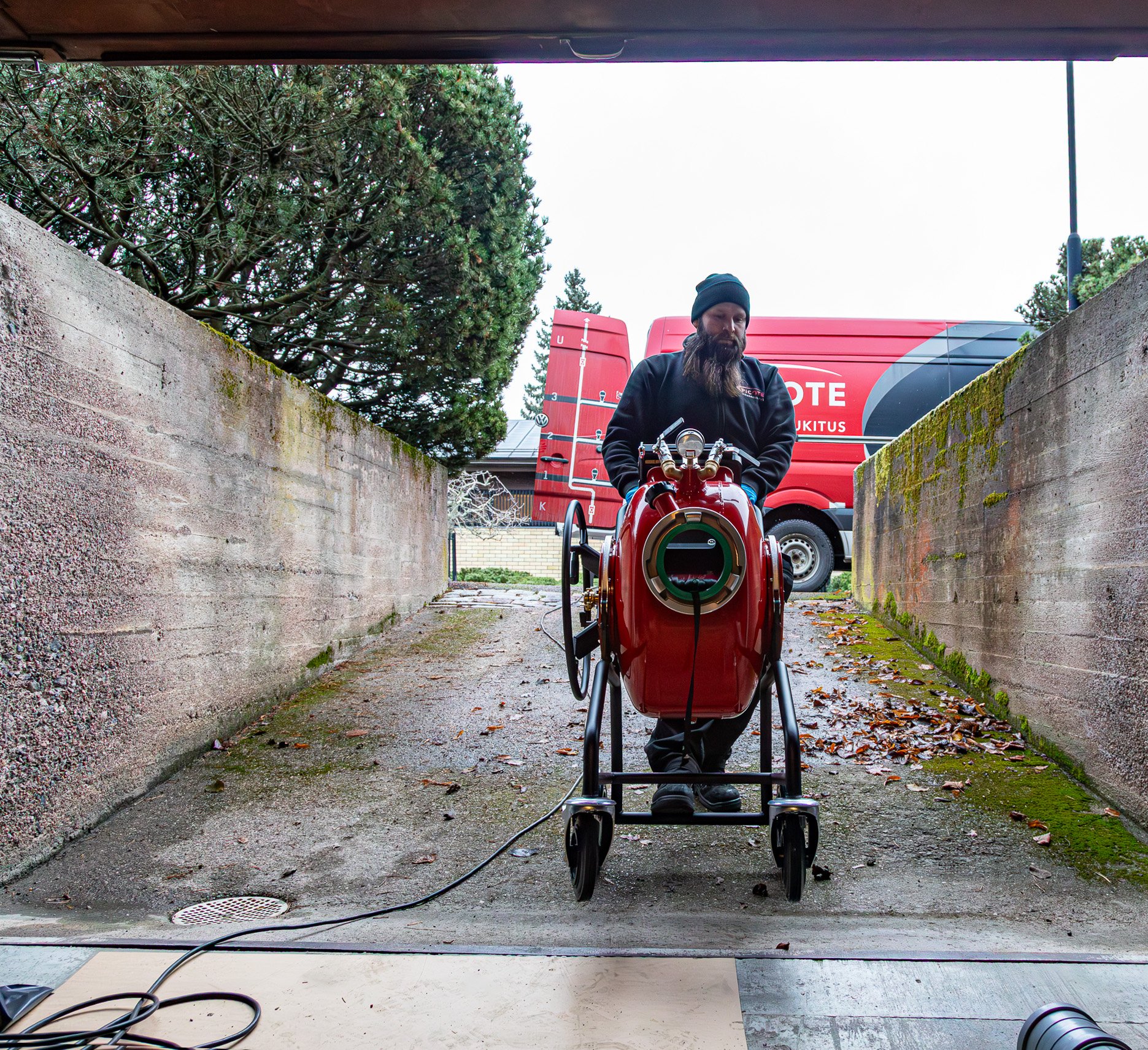
Photo: Ease-of-movement is key onsite.
Looking back, what are you most proud of?
Probably the amount of engineering that's hidden inside something that looks quite straightforward.
At first glance, the drums don't appear radically different, but a huge amount of work went into areas that most people won't immediately notice. Good engineering isn't always about making something look different. Sometimes it's about making something work better in a way that simply feels natural to the person using it.
Photo: Picote lining drum during a demo at WWETT 2026, in combination with the Picote Smart Heat and Pressure Guard Systems for stress-free lining.
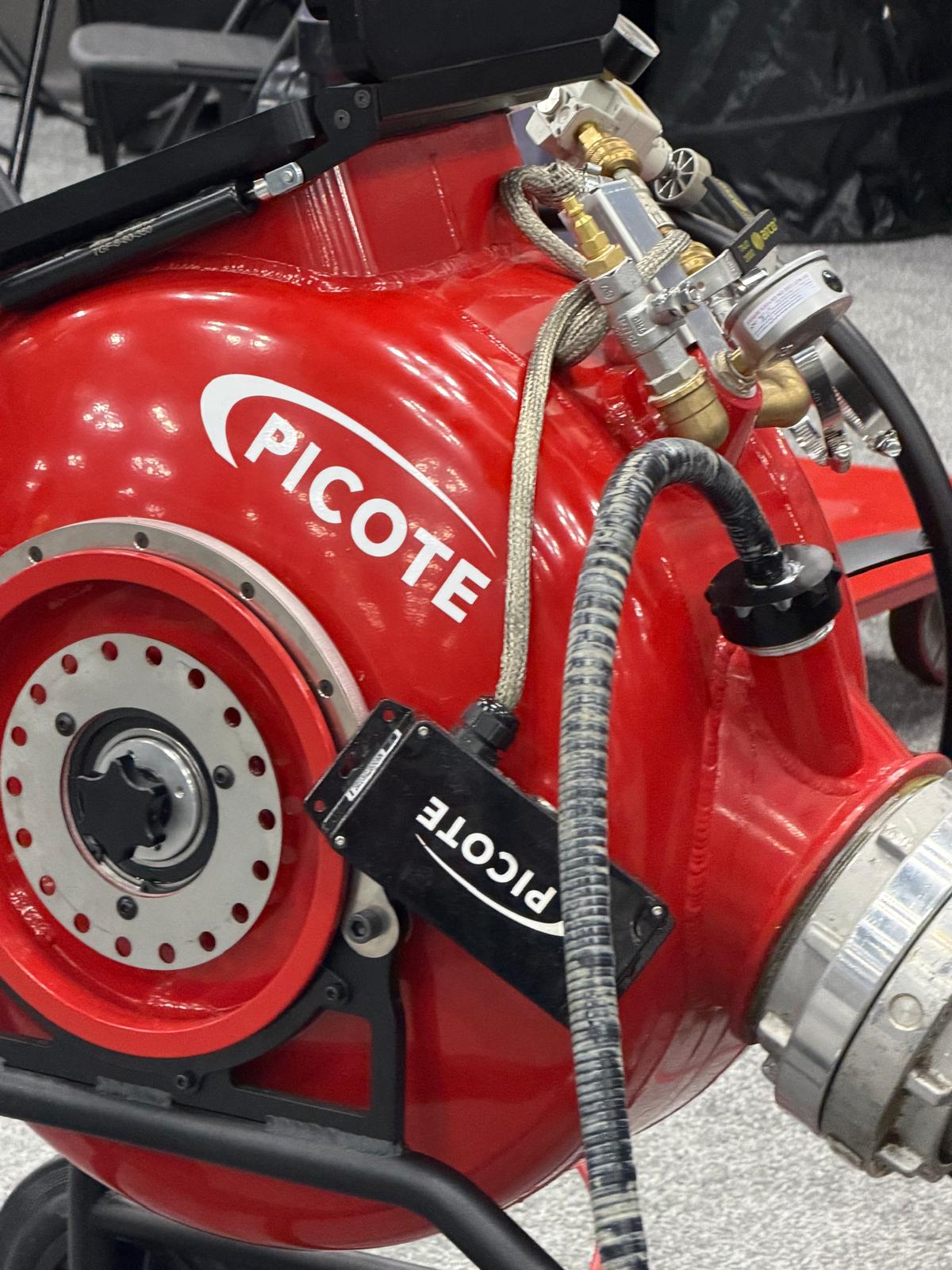
Picote CIPP Lining Drums
- Available in sizes 550, 780 and 780 Wide, with the compact 360 Drum joining the range this year
- CE-certified pressure vessel design (PED compliant)
- High pressure ratings for compatibility with a wider range of liner materials
- Compatible with the Picote Pressure Guard
- Stable design optimised for UV curing equipment
- Large viewing window for improved visibility during installation
- Innovative two-stage safety locking mechanism with tool-free, one-handed hatch opening
- Hollow central shaft allows water feed while retaining reversible crank position
- Removable drum from trolley for increased flexibility
- Multi-Port compatible with CCTV, Smart Heat Cable and steam
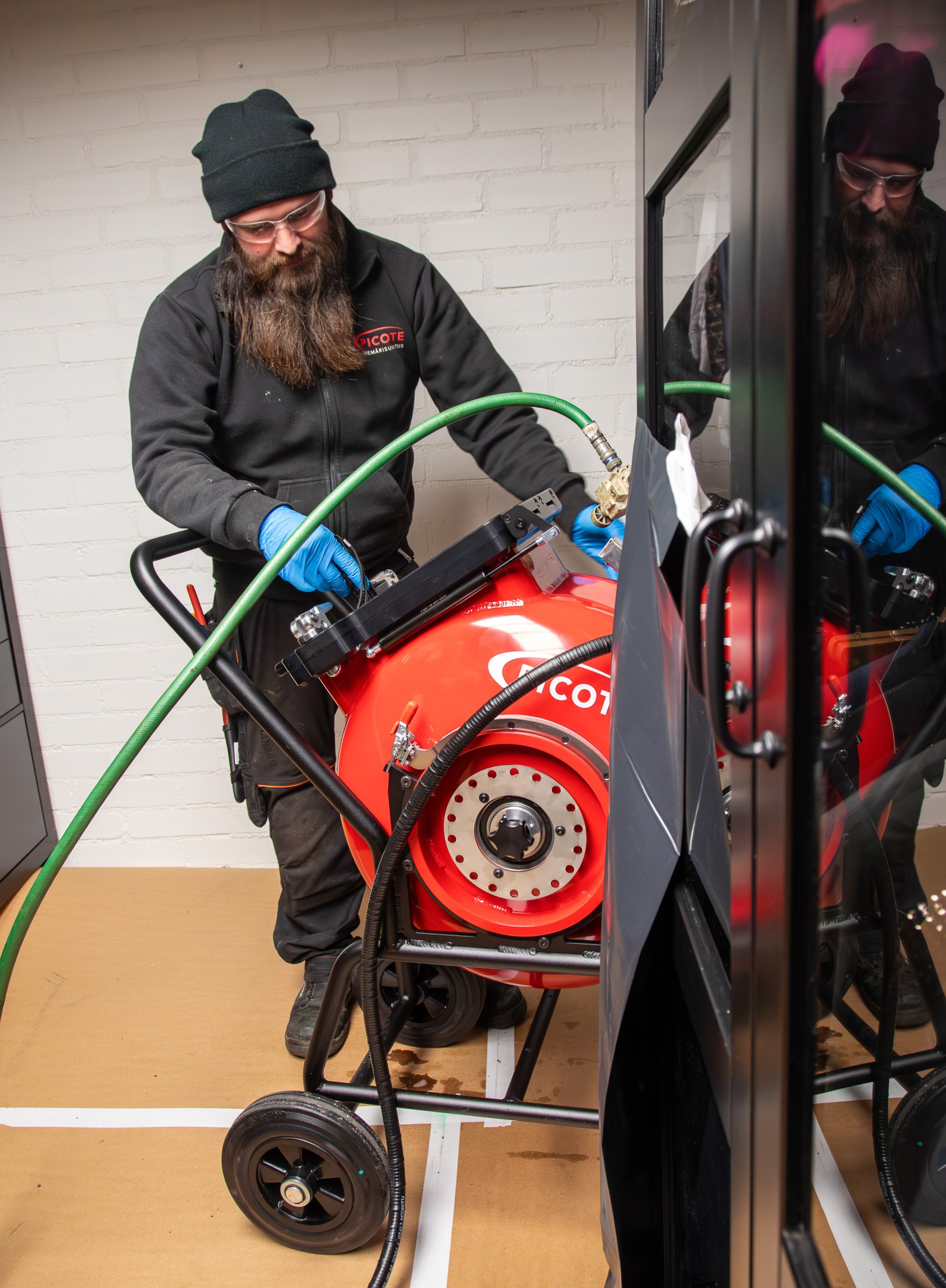
For more information head to the Picote Lining Drums Page HERE.
For pricing, lead times and purchase information please speak to your local reseller. Click HERE for the full list of Picote Resellers.